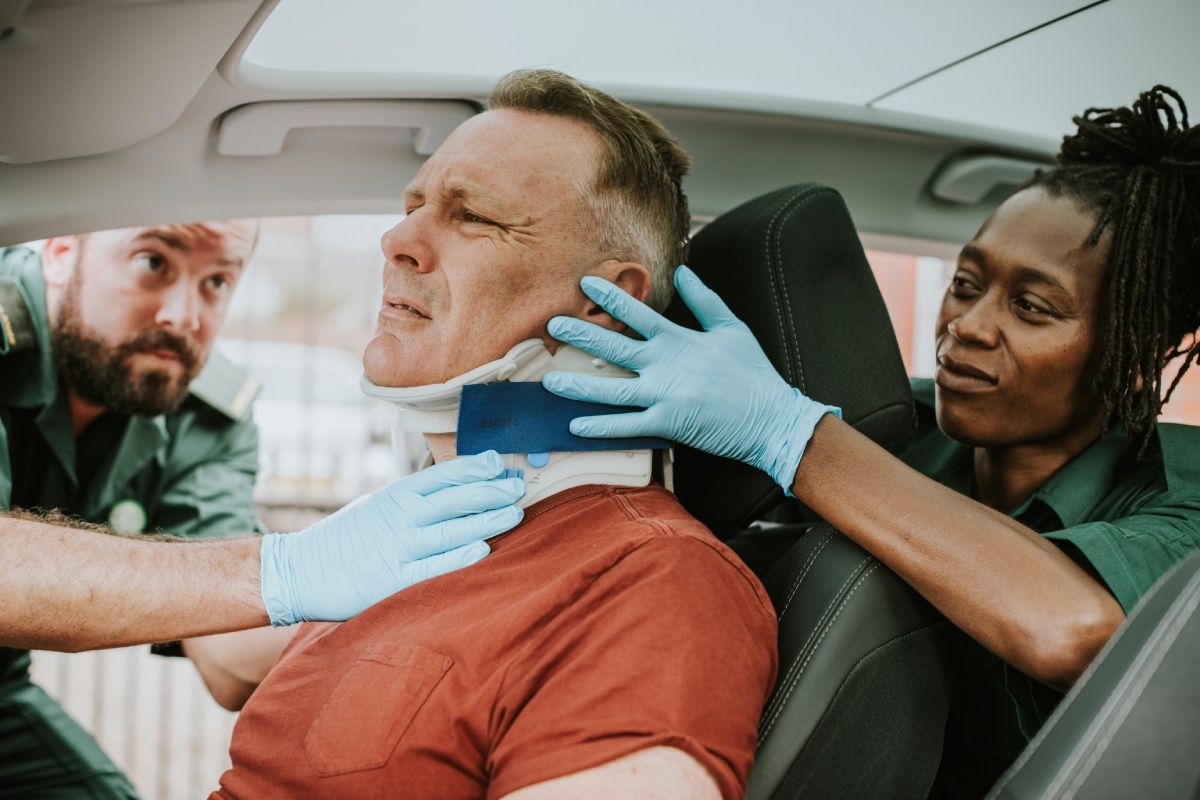
Catastrophic Injuries in Florida: When an Accident Changes Everything
Some injuries heal. Others change the entire shape of a person's life, permanently and in ways that affect not just the victim but everyone around them. Spinal cord damage that takes away the use of someone's legs, traumatic brain injuries that alter personality and cognitive function, amputations, severe burns, and permanent blindness all fall into a legal category Florida courts treat differently from standard personal injury claims, not because the law is more generous but because the actual cost of these injuries, calculated honestly over a lifetime, demands a different kind of case. This article covers what qualifies as a catastrophic injury under Florida law, why these cases require more than a typical personal injury approach, and what compensation realistically looks like when someone is facing a lifetime of consequences from someone else's negligence.
What Qualifies as a Catastrophic Injury Under Florida Law?
Florida doesn't have a single statute that lists every catastrophic injury by name, but the term carries real legal weight in how courts and practitioners approach these cases. A catastrophic injury, as the concept operates in Florida personal injury law, is one that permanently and severely alters the victim's ability to function, work, or live independently. Spinal cord injuries, traumatic brain injuries, amputations, severe burns covering significant body surface area, loss of sight or hearing, and injuries that leave someone in a permanent vegetative state are the clearest examples. What ties them together isn't the mechanism of injury; it's the permanence and the scale of disruption to the victim's life going forward.
The distinction matters practically because catastrophic injury cases are built on a fundamentally different damages model than standard personal injury claims. When someone breaks an arm in a car accident, the damages picture is mostly backward-looking: what did treatment cost, how much work was missed, what was the pain and suffering during recovery. Catastrophic injuries require a forward-looking analysis that can span decades. A 35-year-old who sustains a spinal cord injury needs someone to calculate what full-time care costs over the next 40 or 50 years, what adaptive equipment will be needed and when it will need replacement, what the lost career trajectory looks like in dollar terms, and how those numbers should be discounted to present value. That's a different kind of case, built by different experts, argued with different evidence.
Traumatic brain injuries present a particular challenge in this category because they often don't look catastrophic at first. The early imaging can appear relatively normal while the victim experiences significant cognitive changes, personality shifts, memory problems, and behavioral dysregulation that become more apparent over weeks and months. A person who walks out of the emergency room after a car accident, passes the initial neurological screening, and is told there's no bleeding on the CT scan can still have a genuinely catastrophic brain injury that unfolds gradually. Missing that possibility in the acute phase, and failing to document it properly as symptoms emerge, can cost an injured person and their family millions of dollars in claim value.
- Spinal cord injuries, traumatic brain injuries, amputations, severe burns, and permanent sensory loss are the most common catastrophic injury categories in Florida personal injury litigation
- The forward-looking damages model in catastrophic injury cases requires retained life care planners, vocational rehabilitation experts, and economists whose opinions must hold up under cross-examination
- Traumatic brain injuries are frequently underdiagnosed at the scene and in the emergency setting; follow-up neuropsychological evaluation weeks or months later often reveals the full scope of the damage
- Children who sustain catastrophic injuries present a unique damages challenge because their lost earning capacity and lifetime care needs span a much longer horizon than adult victims
Worth noting for families navigating a situation this serious: the gap between what a catastrophic injury actually costs over a lifetime and what an insurance company's initial assessment of the claim reflects is frequently enormous. Carriers have every financial incentive to close these claims quickly and cheaply, before the full picture of the injury's consequences is documented. The weeks immediately after a catastrophic accident are often the most legally vulnerable period for the victim's family, precisely because everything is uncertain, everyone is overwhelmed, and the insurer's representatives are already working the claim.
How Catastrophic Injury Claims Differ From Standard Personal Injury Cases
The single biggest difference between a catastrophic injury claim and a standard personal injury case isn't the legal theory; it's the damages calculation, and specifically how much of it points forward rather than back. Standard claims are largely about documenting what already happened: treatment costs, missed work, pain and suffering during a defined recovery period. Catastrophic injury cases require building an evidence-based projection of what the next 30, 40, or 50 years actually look like, in dollar terms, for someone whose life has been permanently altered. Getting that number right, and defending it against the defense's own experts who will argue it's inflated, is the central challenge in this kind of litigation.
Standard Personal Injury vs. Catastrophic Injury Claims: Key Differences
| Case Element | Standard Personal Injury Claim | Catastrophic Injury Claim |
|---|---|---|
| Primary damages driver | Past medical bills and near-term lost wages | Lifetime care cost projection, often the largest single line item |
| Expert witnesses typically needed | Treating physician, sometimes an economist | Life care planner, neurologist or spinal specialist, vocational expert, economist |
| Settlement timeline | Three to twelve months pre-suit in many cases | One to three years; full medical picture takes time to develop |
| Insurance coverage usually involved | Standard liability policy; sometimes UM/UIM | Policy stacking common; commercial policies, umbrella coverage, and employer liability all relevant |
| Comparative fault risk | Significant but manageable through counter-evidence | Defense invests heavily in fault assignment; reconstruction experts often retained by both sides |
| Wrongful death overlap | Rare | Frequent; catastrophic injuries that prove fatal trigger separate wrongful death claim for survivors |
Life care planning is the discipline that makes future damages concrete in catastrophic injury cases, and it's something most people outside of serious injury litigation haven't encountered. A certified life care planner reviews the medical records, consults with treating physicians and specialists, and produces a detailed document projecting every category of care the victim will need from the present through the end of their life expectancy: attendant care hours per day, adaptive equipment and its replacement cycle, medication costs, physician visit frequency, surgical interventions that are medically probable, home modification costs, and transportation. That document becomes the evidentiary foundation for the economic damages calculation, and in a spinal cord injury or severe TBI case, the numbers in it are often staggering.
Vocational rehabilitation experts address a different piece of the damages picture: what the injury has done to the victim's ability to earn a living. A 40-year-old skilled tradesperson who sustains a below-elbow amputation faces a different vocational picture than a 40-year-old office worker with the same injury. A catastrophic injury attorney retains a vocational expert who evaluates the victim's pre-injury work history, the specific functional limitations created by the injury, and what, if any, gainful employment remains realistic. That opinion, combined with an economist's calculation of the wage differential over the remaining career, produces the lost earning capacity figure that anchors the economic damages claim. Leaving that analysis undone, or relying on a simple multiplication of the victim's current salary, routinely understates the actual loss by a significant margin.
- Life care planning documents project every future care cost over the victim's life expectancy; in spinal cord and severe TBI cases these projections often reach seven figures
- Vocational rehabilitation experts evaluate what work, if any, remains realistic after a catastrophic injury; their opinions combined with economic testimony establish the lost earning capacity claim
- Attendant care costs, home modifications, adaptive equipment replacement cycles, and the cost of future surgical interventions are all compensable and all require expert documentation to defend at trial
- Defense teams in catastrophic injury cases routinely retain their own life care planners and vocational experts to challenge damages; the quality and experience of the plaintiff's experts matters enormously
The timeline reality in catastrophic injury litigation is worth being direct about: these cases take longer than standard personal injury claims, often significantly so, and the length is generally justified by the stakes. Settling a catastrophic injury case before the full medical picture has stabilized, before the treating team can offer meaningful opinions about the permanence of the deficits, and before the life care plan is built and vetted, is one of the most costly mistakes a victim or their family can make. The settlement that closes the claim is permanent. Whatever wasn't accounted for in the damages calculation becomes the victim's financial responsibility for the rest of their life.
Long-Term Damages and Compensation in Florida Catastrophic Injury Lawsuits
A spinal cord injury that leaves someone with paraplegia carries a lifetime care cost that routinely exceeds $1.5 million in direct medical and attendant care expenses alone, before a dollar of lost wages or pain and suffering is calculated. Quadriplegia pushes that number substantially higher, often past $3 million in care costs, because the level of daily assistance required is so much greater. These aren't litigation inflation figures; they're what treating physicians and life care planners document when they're asked to honestly project what full care looks like over a normal life expectancy for someone in their thirties or forties. The personal injury lawsuit that recovers fair compensation for a catastrophic injury isn't an attempt to profit from tragedy. It's the only mechanism available for making sure someone whose life was altered by another person's negligence doesn't spend decades paying for that negligence out of their own limited resources.
Florida doesn't cap non-economic damages in most personal injury cases, which is significant in catastrophic injury litigation. Pain and suffering, loss of enjoyment of life, emotional distress, the effect on intimate relationships and family dynamics: all of these carry real value in a case where the victim is 35 years old and facing the next 50 years of life with a permanent disability. A jury evaluating that situation isn't constrained by an arbitrary dollar limit, and experienced catastrophic injury attorneys present these damages through specific, individualized evidence rather than generalities, because generalities are what defense counsel attacks most effectively.
When a catastrophic injury proves fatal, either at the scene or following a period of treatment, the legal framework shifts from a personal injury lawsuit to a wrongful death claim under Florida's Wrongful Death Act. The two can overlap in complex ways: if the victim survived for a period before dying, the estate may have both a survival claim for the victim's own pain and suffering during that period and a wrongful death claim for the survivors' losses. Those survivors, typically a spouse, children, and in some cases parents, can recover for lost financial support, lost companionship, lost parental guidance for minor children, and mental anguish, all calculated over their own life expectancies rather than just the period of the injury. Families navigating this combination of claims need a personal injury law firm that handles both with the same level of preparation.
- Lifetime care cost projections in spinal cord injury cases regularly exceed $1.5 million for paraplegic victims and climb significantly higher for quadriplegia, before lost wages or non-economic damages are added
- Florida's absence of a non-economic damages cap in most personal injury cases means catastrophic injury verdicts and settlements can reflect the full human cost of the loss without an arbitrary ceiling
- When catastrophic injuries result in death, the personal injury framework gives way to Florida's Wrongful Death Act, which provides a separate and additional damages path for surviving family members
- Punitive damages are available in Florida personal injury cases where the defendant's conduct was grossly negligent or intentional; catastrophic injury cases involving drunk drivers, distracted commercial drivers, or reckless property owners sometimes support a punitive claim
For families in the middle of this, the financial pressure to resolve quickly can be intense. Medical bills accumulate. Rehabilitation costs money every week. The household income that was lost when someone couldn't return to work isn't coming back on its own. Insurance carriers are aware of all of this, and early settlement offers in catastrophic injury cases are often calibrated precisely to that pressure rather than to what the claim is actually worth. A catastrophic injury attorney's role includes not just building the case but helping families understand what they'd be giving up by settling too soon, and finding ways to manage the financial pressure while the claim is properly developed.
Frequently Asked Questions
What types of injuries are considered catastrophic in Florida personal injury cases?
The category isn't defined by a single Florida statute, but in practice it covers injuries that permanently and severely limit the victim's ability to function independently. Spinal cord injuries resulting in paralysis, traumatic brain injuries with lasting cognitive or behavioral effects, amputations of limbs, severe burns affecting significant body surface area, loss of vision or hearing, and injuries leaving someone in a vegetative state are the most commonly litigated catastrophic injury cases in Florida. What these share isn't a specific diagnosis so much as a prognosis: the injury won't resolve, the limitations won't disappear with time and therapy, and the victim's life going forward looks fundamentally different from the one they had before.
How long does a catastrophic injury lawsuit take to resolve in Florida?
Longer than most people want, and usually for good reason. The medical stabilization period alone, the point at which treating physicians can speak meaningfully about what's permanent versus what might improve, can take six months to a year for serious spinal cord and brain injuries. Building the expert evidence, the life care plan, the vocational assessment, the economic projections, adds more time. And if the case moves into formal litigation, which catastrophic injury cases frequently do because the stakes are too high for insurers to settle cheaply without pressure, discovery involving medical records, depositions of treating physicians, and defense expert challenges adds another year or more. Families who hear 'two to three years' and feel frustrated by it are understandably impatient. But the alternative, settling before the full picture is built, routinely costs far more than the delay.
Can a family member file a claim on behalf of someone who is incapacitated after a catastrophic injury?
Yes, through a legal guardianship or as a next friend in litigation, depending on the circumstances. When a catastrophic injury leaves someone unable to manage their own legal affairs, whether because of a coma, severe traumatic brain injury, or other incapacitating condition, Florida law provides mechanisms for a family member or appointed guardian to act on their behalf in civil litigation. The procedural requirements vary depending on the victim's exact condition and legal status, and a catastrophic injury attorney walks families through what's required in their specific situation. Acting promptly matters, both to preserve evidence and to ensure that insurance carriers and at-fault parties don't take advantage of the period when no one has formally stepped into the legal role of protecting the victim's interests.
What if the person responsible for the catastrophic injury doesn't have enough insurance to cover the damages?
This is one of the more painful realities in catastrophic injury cases, and it comes up more than families expect. A driver who causes a crash resulting in quadriplegia may carry a $100,000 liability policy, which covers almost nothing relative to the actual damages. The analysis then turns to every other available source: the victim's own underinsured motorist coverage, any commercial policy that might apply if the at-fault driver was working at the time, employer liability if the driver was on the job, property owner liability if the location of the crash involved a dangerous condition, and in some cases product liability against a vehicle manufacturer. A catastrophic injury attorney's early investigation is largely about mapping every potential coverage source before any of them close off, because in these cases the difference between identifying three sources of recovery and identifying one can be the difference between a life with adequate care and a life spent in financial crisis.
Does Florida law allow punitive damages in catastrophic injury cases?
In certain circumstances, yes. Florida Statute 768.72 allows punitive damages in personal injury cases where the defendant's conduct was intentional or showed a conscious disregard for the rights and safety of others, which is a higher standard than ordinary negligence. A drunk driver who got behind the wheel with a blood alcohol level twice the legal limit and caused a spinal cord injury is a stronger candidate for punitive damages than a distracted driver who ran a light. A commercial trucking company that knowingly allowed a driver with multiple safety violations to stay on the road faces a different exposure than one whose driver made an unexpected error. Whether punitive damages are viable in a specific catastrophic injury case depends on what the evidence about the defendant's conduct actually shows, and experienced catastrophic injury attorneys evaluate that question as part of the early case assessment.
Legal Disclaimer: The content provided on this blog is for informational and marketing purposes only and does not constitute legal advice or create an attorney-client relationship. The information contained herein is general in nature and may not apply to your particular legal situation. Readers should not act or refrain from acting based on any content on this blog without first seeking appropriate legal or professional advice. This blog is intended solely for the promotion and marketing of The Dill Law Group's services and has been drafted through the support of non-lawyers. No content may be copied, reproduced, distributed, or used for any other purpose without the express written consent of The Dill Law Group. Viewing or publicly interacting with this blog does not create any obligation on the part of the firm to provide legal representation, and communications through this platform may not be confidential or privileged. For legal advice specific to your situation, please contact our office directly at (407) 367-0278 to have a free consultation about your particular case, which is protected through the attorney-client relationship.