Florida Premises Liability: When Property Owners Are Responsible for Your Injuries
Property owners in Florida carry a legal duty to maintain reasonably safe conditions for the people who enter their premises, and when they fail that duty and someone gets hurt, the law provides a path to compensation through a premises liability claim. The category is broader than most people realize: it covers everything from grocery store falls to swimming pool drownings at rental properties. What ties these claims together is the same underlying question: did the property owner know about a dangerous condition, or should they have known, and did they fail to address it? This article walks through what qualifies as a premises liability claim under Florida law, how it differs from a slip-and-fall case specifically, and what proving a property owner's negligence actually requires.
What Qualifies as a Premises Liability Claim Under Florida Law?
A premises liability claim arises any time a person is injured on someone else's property because of a condition the owner controlled and failed to make safe. The injury doesn't have to involve a fall. Premises liability is an umbrella category that includes
slip and fall cases, trip and fall cases, swimming pool accidents, elevator and escalator injuries, injuries caused by falling objects, and cases where children are hurt by hazardous features that drew them onto the property. What all of these have in common is a property owner who owed the victim a duty of care and didn't meet it.
Florida law determines how much duty a property owner owes based on why the injured person was on the property. Business invitees, meaning customers, clients, and anyone invited to enter for a commercial purpose, receive the highest protection: the owner must regularly inspect, discover hazards, and either repair them or provide adequate warning. Licensees, such as social guests in a private home, are owed a duty to warn of known dangers the guest wouldn't reasonably discover on their own. Trespassers generally receive the least protection, though Florida's attractive nuisance doctrine creates an important exception for children lured onto property by features like unsecured pools or abandoned equipment.
Types of Premises Liability Claims and Common Florida Examples
| Claim Type | Claim Type What It Coversype | Common Examples in Florida |
|---|---|---|
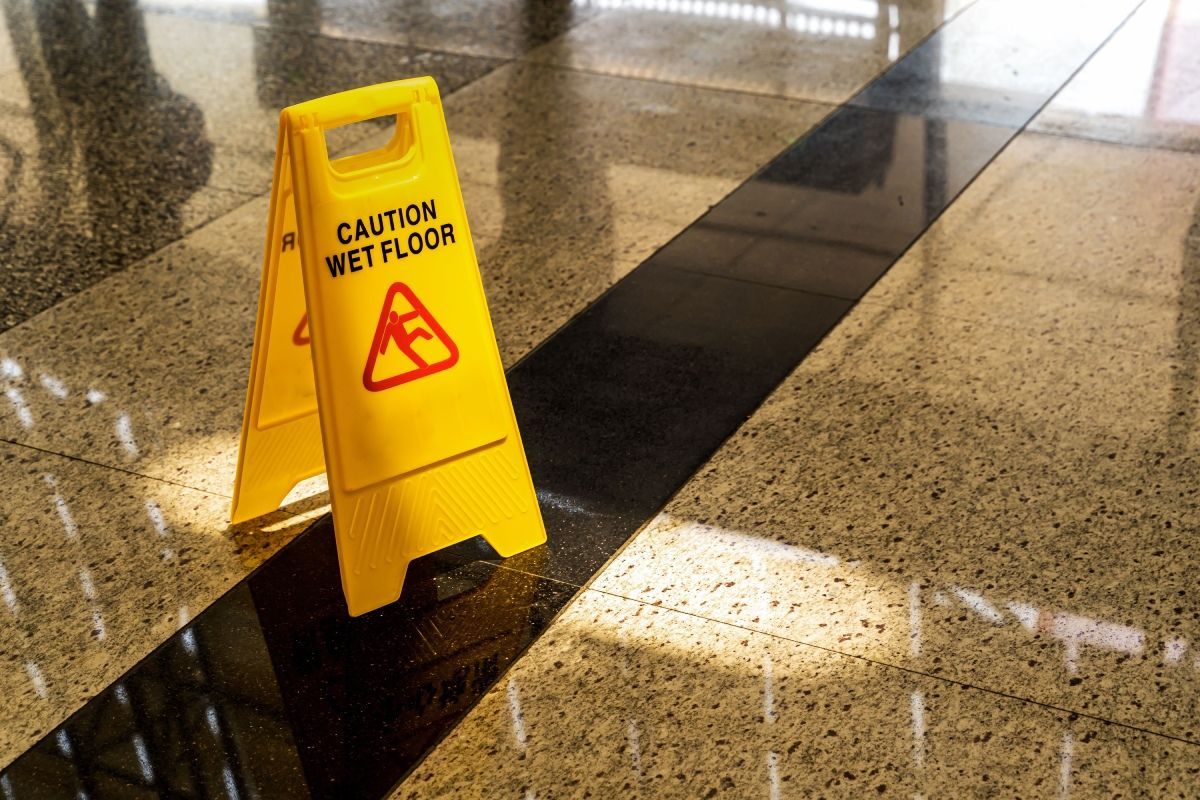
| Slip and fall | Transitory hazards like spills, wet floors, or debris causing a fall | Grocery store spill, wet lobby tile, unmarked step-down |
| Trip and fall | Fixed or semi-permanent hazards causing a pedestrian to trip | Broken sidewalk, uneven pavement, raised threshold |
| Swimming pool accidents | Drowning or injury from unsecured or improperly maintained pool areas | Unfenced residential pool, resort pool without posted depth, defective drain |
| Elevator and escalator injuries | Mechanical failure or improper maintenance of vertical transportation | Sudden stop, gap entrapment, door malfunction |
| Attractive nuisance | Hazardous features that draw children onto property where they're injured | Unfenced pool, abandoned equipment, accessible rooftop |
Government-owned property adds a layer of procedural complexity that private property claims don't involve. Suing a Florida city, county, or state agency for a premises liability injury requires compliance with specific notice requirements under Florida Statute 768.28, including written notice to the agency within three years of the incident. Missing that notice requirement can bar an otherwise valid claim entirely. A
premises liability attorney familiar with Florida law identifies whether any government entity might be responsible early in the case, before the notice deadline passes.
- Business invitees, including retail customers and restaurant guests, are owed the highest duty of care under Florida premises liability law
- Government-owned property claims require written notice to the responsible agency within three years of the incident under Florida's sovereign immunity statute
- Swimming pool injuries at hotels, apartment complexes, and rental properties frequently involve premises liability when fencing, signage, or supervision requirements weren't met
Slip and Fall vs. Premises Liability: Understanding the Legal Distinction
Slip and fall is a subcategory of premises liability, not a separate legal theory. The distinction matters because people sometimes treat 'slip and fall' as the name of the legal claim, when it's really just a description of the mechanism of injury. The legal claim is premises liability, and it applies equally whether you slipped on a spill, tripped over a raised floor tile, or fell into an unmarked swimming pool.
Why the distinction matters practically is that the evidentiary requirements differ depending on the type of hazard involved. For transitory foreign substance cases, meaning falls caused by spills or substances on floors in business establishments, Florida Statute 768.0755 requires the injured person to show the business had actual knowledge of the hazard or that it existed long enough that a reasonable inspection would have caught it. That's a specific statutory standard that applies to slip-and-fall cases in commercial settings.
Other premises liability cases, like pool accident cases, are governed by more general negligence principles without that same constructive knowledge requirement.
- Slip and fall cases in commercial settings carry a statutory actual or constructive knowledge requirement under Florida Statute 768.0755; other premises liability claims don't
- The same fall can be analyzed as either a slip and fall or a general premises liability claim depending on what caused the hazard and who controlled it
How to Prove a Property Owner's Negligence in a Florida Premises Liability Case
Proving negligence in a Florida premises liability case requires establishing four things: the property owner owed you a duty of care, they breached that duty by failing to maintain a reasonably safe condition, that breach caused your injury, and you suffered actual damages as a result. The duty element is usually straightforward once the victim's status as an invitee, licensee, or trespasser is established. The harder work is proving the breach and the causation, and that's where the evidence gathered in the days immediately following the incident makes or breaks the case.
Knowledge is the pivot point in most premises liability cases. If you can show the property owner created the hazardous condition, actual knowledge is implied. If the owner didn't create it, you need to show they knew about it through prior reports or complaints, or that the condition had existed long enough that they should have discovered it through reasonable inspection. Maintenance records, incident report logs, employee testimony, and prior complaint documentation become critical. A premises liability attorney sends formal requests for those records early in the case, before the property owner has time to organize a defense strategy around them.
The evidence window in premises liability cases is narrow and closes fast. Surveillance footage showing how long a hazard existed before the injury overwrites on a standard schedule. The property may be repaired or altered before anyone documents the condition. Witnesses disperse. A premises liability law firm retained quickly sends spoliation letters, photographs the scene independently, and builds a factual record before the physical evidence disappears. Clients who wait weeks or months to consult an attorney often find that the most useful evidence is already gone.
- Maintenance records and prior incident reports establish that the property owner had notice of a recurring hazard and failed to address it
- Surveillance footage is among the most valuable evidence in premises liability cases and typically overwrites within 30 to 60 days without a preservation demand
- Independent scene documentation by the attorney's team, done shortly after the incident, captures conditions that property owners frequently repair before litigation begins
- Medical records establishing the connection between the injury and the incident date are essential; gaps in treatment give defense counsel room to challenge causation
Frequently Asked Questions
Does premises liability only apply to businesses, or can I sue a private homeowner?
Both are possible, though the practical path to recovery differs. A business owner typically carries commercial general liability insurance, which provides a clear source of compensation when a premises liability claim succeeds. Private homeowners usually have homeowners insurance, which may cover liability for injuries to guests under certain circumstances. The legal duty owed to a social guest in a private home is lower than what a business owes to its customers, but it still exists: homeowners must warn licensees of known hidden dangers. A premises liability attorney assesses the specific facts and insurance coverage before advising on the viability of a claim against a private property owner.
What if I slipped on a natural condition like rain water near a store entrance?
Natural conditions like rainwater don't automatically shield a property owner from liability in Florida. The question is whether the owner took reasonable steps to manage a foreseeable condition. A store in Florida during rainy season that puts no mats at the entrance, posts no warning signs, and doesn't assign anyone to monitor floor conditions near the door isn't shielded by the fact that rain is natural. The owner's obligation is to manage hazards that are reasonably foreseeable, and wet floors near entrances during rain are about as foreseeable as a hazard gets. Whether the owner met that obligation depends on what measures were in place and documented.
Can I file a premises liability claim if I was injured in a parking lot?
Yes, parking lots are covered under premises liability law when they're controlled by a property owner or business. Common parking lot claims include falls caused by potholes, uneven pavement, or inadequate lighting. The owner's duty extends to the entire property they control, not just the building interior. Establishing liability requires showing the owner knew or should have known about the hazard and failed to address it within a reasonable time.
What damages can I recover in a Florida premises liability lawsuit?
The same categories that apply to any
Florida personal injury case: economic damages covering medical bills both past and future, lost wages during recovery, and reduced earning capacity if the injury affects your ability to work; and non-economic damages including pain and suffering, loss of enjoyment of life, and emotional distress. The severity of the injury drives the total value significantly. A fall that results in a fractured hip requiring surgery and months of rehabilitation produces a very different damages picture than a
soft tissue injury that resolves in weeks. Florida doesn't cap non-economic damages in most premises liability cases, so serious permanent injuries can support substantial recoveries beyond the documented economic losses.
How long do I have to file a premises liability claim in Florida?
Two years from the date of the injury for incidents occurring on or after March 24, 2023, under Florida's general personal injury statute of limitations. If the claim involves a government entity, the notice requirement under Florida Statute 768.28 is a separate deadline that runs on its own timeline. Missing the notice window for a government claim can bar recovery entirely, even if the lawsuit itself would have been timely. Consulting a premises liability attorney promptly after an injury on someone else's property is the safest way to make sure no deadline is missed and no evidence is lost while you're still deciding what to do.
Legal Disclaimer: The content provided on this blog is for informational and marketing purposes only and does not constitute legal advice or create an attorney-client relationship. The information contained herein is general in nature and may not apply to your particular legal situation. Readers should not act or refrain from acting based on any content on this blog without first seeking appropriate legal or professional advice. This blog is intended solely for the promotion and marketing of The Dill Law Group's services and has been drafted through the support of non-lawyers. No content may be copied, reproduced, distributed, or used for any other purpose without the express written consent of The Dill Law Group. Viewing or publicly interacting with this blog does not create any obligation on the part of the firm to provide legal representation, and communications through this platform may not be confidential or privileged. For legal advice specific to your situation, please contact our office directly at (407) 367-0278 to have a free consultation about your particular case, which is protected through the attorney-client relationship.